THE READING ROUTE
Seven voices. A life between them.
We begin at a kitchen table, follow seven different ways of seeing, then return to an ordinary evening with a wider set of questions. Read in order, or enter through a question that feels close. The complete monograph and evidence map follow the route.
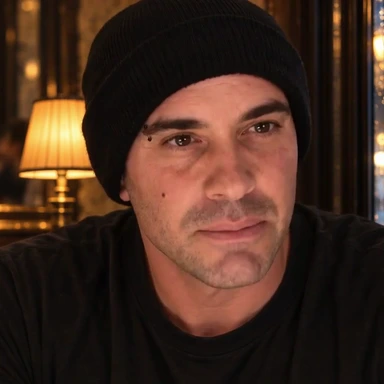 01
01Tom · Flow Hijacked
The morning after the old escape
The kettle boils. The phone stays silent. You have stopped doing the thing that was hurting you. What happens now?
Sometimes the difficult part begins after a change everyone has been waiting for. A person stops drinking, leaves a damaging relationship, or gets through a crisis. From the outside, a door has opened. Inside, the next hour may still feel empty. The familiar way out has gone, but nothing has quite taken its place.
This is one starting point, not a description of everyone’s recovery. Care, safety and relief matter in their own right. Yet a life also needs somewhere to go: someone to meet, work that leaves something of us intact, an ordinary evening we do not have to disappear from. The question is larger than how to stop an act. What could make staying in life possible?
In the film, Tom brings that question to an imagined café. Seven thinkers approach it from different directions. They belong to different philosophical and therapeutic traditions, and they do not arrive at a common answer. We can still let each one notice what the others might miss.
Sources & deeper reading
First comes the uncomfortable possibility that our old story is not the whole of who we are.
↓ 02
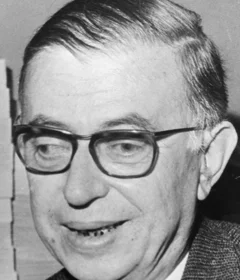
02Jean-Paul Sartre
Sartre: a history is not a verdict
I have always been like this. It can sound like an explanation. Sometimes it also closes a door.
Jean-Paul Sartre challenges the idea that a person is a finished object with a fixed purpose. We have a past, a body and circumstances we did not choose. But we also take up a position toward them through what we do. In his account of bad faith, we can hide from that tension by treating a role as our entire identity, or by pretending our circumstances do not matter.
There is something both bracing and frightening here. If a past does not settle everything, another response may be possible. That does not mean every response is available now. Reading Sartre as a demand to simply choose better would turn a difficult philosophy of freedom into an accusation against people already struggling.
For our morning at the kitchen table, the useful question is modest: is there one response that the sentence this is just who I am has hidden from view? Even asking may loosen an identity that has become too tight. But before asking someone to walk through a door, we need to find out whether they can reach it.
Sources & deeper reading
Beauvoir makes the conditions of freedom, and our responsibility for one another’s freedom, central to the conversation.
↓ 03
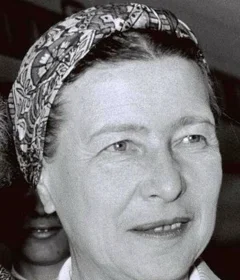
03Simone de Beauvoir
Beauvoir: whose door is actually open?
Two people can be offered the same choice and have very different chances of taking it.
Simone de Beauvoir keeps freedom connected to a situation. Money, dependence, oppression, bodily limits and other people’s power do not form a neutral backdrop. They help shape what someone can attempt. Her ethics also ties our freedom to that of others. My project cannot make freedom a serious value while treating your possibilities as disposable.
Imagine telling two people to take an evening for themselves. One has childcare, transport and a safe place to return to. The other has none of those. The words are identical. The invitation is not. Naming the difference does not erase responsibility. It makes the conditions of responsibility visible.
This sharpens Sartre’s question. What can I do with my life, and what needs to change around me so that doing it becomes possible? A conversation, practical help or a safer setting may matter before an inspiring insight. Still, even a genuinely open door gives no guarantee that life will explain itself on the other side.
Sources & deeper reading
Simone de Beauvoir · The Ethics of Ambiguity · 1947 ↗
Beauvoir adds a philosophical layer to this reading route. Her source is linked above. The monograph chapters below explore the related questions of conditions and freedom.
That is where Camus enters: what if there is no final explanation waiting for us?
↓ 04
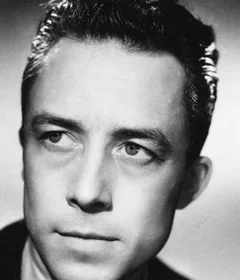
04Albert Camus
Camus: an ordinary day without a guarantee
We want life to explain why it hurts. The world does not reliably answer.
Albert Camus places the absurd in the encounter between our hunger for meaning and the world’s silence. It is not simply the slogan that nothing matters. His response is to live without disguising the difficulty, and without making certainty a condition for participation in life. Camus resisted the existentialist label, even though his questions belong in this conversation.
There is relief in being allowed to say that something was senseless. An illness need not be a lesson. A loss need not have happened for a reason. We can resist avoidable suffering, care for one another and notice a patch of sunlight without first explaining the universe.
At the kitchen table, this might mean making breakfast before answering the question of what the rest of life is for. That is our everyday application, not a quotation from Camus. A day can contain something worth doing even when the larger question stays open. But can it also ask something particular of us?
Sources & deeper reading
Frankl does not resolve Camus’s disagreement with the universe. He turns our attention toward the person or task in front of us.
↓ 05
05Viktor Frankl
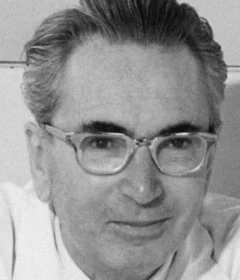
Frankl: something here may need you
Meaning sometimes arrives as a person to call, a piece of work to finish, or a promise small enough to keep.
For Viktor Frankl, meaning is something to discover and respond to in a particular situation, not something a therapist can assign. His logotherapy asks how a person may encounter meaning through creating, loving and responding to circumstances. Its account includes the attitude we take toward unavoidable suffering. The word unavoidable matters. It gives no reason to tolerate harm that can be relieved, or to romanticize pain.
Frankl and Camus should not be made to agree. They give different accounts of meaning. Yet someone can draw a practical question from their disagreement: without claiming that everything has a purpose, is there something here that matters to me or someone else? The answer might be a child, a repair, a friendship or a small act of care.
For a person who feels nothing yet, even that question can be too much. Meaning is not a test of character. Food, rest, treatment or company may come first. And when something does begin to matter, it can bring fear along with it. Wanting a different life means having something to risk.
Sources & deeper reading
Rollo May stays with the fear that appears when a possibility begins to become real.
↓ 06
06Rollo May
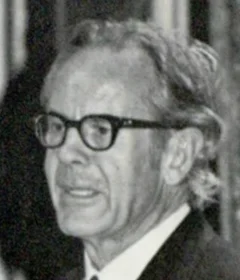
May: courage has room for fear
Wanting to take a step and being frightened of it can both be true.
Rollo May explored anxiety in relation to freedom, threatened values and the possibility of becoming. He distinguished anxiety that can be faced and worked with from anxiety that constricts life. This is not a claim that all anxiety is useful. Severe or persistent distress can need care, and pushing harder is not always courageous.
Suppose the next step is calling an old friend. Fear might be telling you that the relationship matters, that rejection would hurt, or that the situation is unsafe. Those are different problems. Listening carefully matters more than giving fear one heroic interpretation.
A smaller step may help: write a message, choose a safer person, ask for company while making the call. Here the Flow Hijacked question begins to take shape. What would let this person approach without becoming overwhelmed? Courage can include asking someone to stay nearby. That leads us to the limits of doing existence alone.
Sources & deeper reading
Yalom asks what another person can share with us, and what even love cannot remove.
↓ 07
07Irvin Yalom
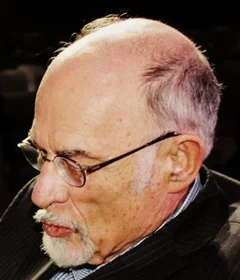
Yalom: alone, and still able to meet
No one can live your life for you. Someone can still sit beside you while you work out how to live it.
Irvin Yalom organizes existential psychotherapy around death, freedom, isolation and meaninglessness. These are concerns that can generate conflict, not diagnoses and not four tasks to complete. Existential isolation is deeper than spending an evening alone: another person cannot fully take over our experience or our decisions.
That limit need not make relationships less valuable. A friend can listen without fixing. A therapist can make room for something we have never managed to say. Being understood does not abolish mortality or uncertainty, but it can change how alone we feel while facing them.
There is another limit worth keeping. Closeness is not automatically safe. A relationship helps when there is room to speak, decline, pause and return. If being cared for costs us our voice, the apparent support may be narrowing our life. What, then, does it mean to have a good life if having more is not enough?
Sources & deeper reading
Fromm shifts attention from what we possess to how we take part in being alive.
↓ 08
08Erich Fromm
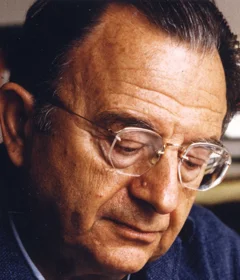
Fromm: a life you do not have to own
You can collect proof that you are doing well and still feel absent from your own life.
Erich Fromm’s distinction between having and being concerns an orientation toward life. In the having mode, identity and security become tied to possession and control. Being involves active, living engagement: loving, learning, attending, creating. It does not mean having no home, no commitments or no need for material security.
Applied to recovery, this raises a question that belongs to our reading of Fromm. Does an identity help a person live, or does life become a daily examination designed to protect the identity? Structure can be indispensable. A recovery community, a routine or a name for an experience may hold us while little else does. The difficulty begins when that support makes it forbidden to become anything more.
Someone can be a person in recovery and also a parent, a hesitant beginner, a friend, someone who laughs at the wrong moment. These do not have to compete for the right to exist. A life can contain several commitments without becoming a perfectly consistent story. How could we turn this possibility into something more concrete than a hopeful thought?
Sources & deeper reading
We return to the kitchen table, with a different question: what would make one more response genuinely available?
↓09Tom · Flow Hijacked
One evening. More than one possible next move.
An option can exist on paper and still be out of reach at seven in the evening.
Imagine a difficult evening after a demanding day. Someone is tired, ashamed of an argument and alone. A familiar escape is easy to reach. Calling a friend is technically possible, but they expect to be a burden. Going out sounds good, but there is nowhere particular to go. The list of options is long. The usable part of it is small.
Now change a few conditions. A friend has agreed that a short message is welcome. There is food ready. A walk has a meeting place and a time. The person has permission to leave early. None of this guarantees what happens. But the same evening may now offer a pause, a conversation or a departure toward something, instead of only a departure from distress.
In the language of Flow Hijacked, a state includes what the body, attention, relationships and surroundings are like together. State space is the range of states we could move through. A trajectory is a path through them over time. In plain language: what can happen next, and what does that next step make possible? The proposed synthesis asks how conditions change those paths. It is a conceptual and research framework, not a validated treatment or an equation that predicts a person.
SAME PERSON · CHANGING CONDITIONS · AN ILLUSTRATION
When the evening closes
Tired. Ashamed. Alone. The old escape is close. Other options feel distant.
A condition shifts
A friend welcomes a message. A meeting has a place. Staying briefly is enough.
More paths become usable
- Pause and rest
- Write or call
- Go to a short meeting
No outcome is guaranteed. The change is that more than one response can genuinely be considered.
Sources & deeper reading
Opening another path is only a beginning. We also need to notice when yesterday’s helpful change becomes today’s obstacle.
↓10Tom · Flow Hijacked
Let each good idea have a counterweight
Acceptance can make room to act. Change can make acceptance easier. Neither has to take over the whole conversation.
The connection between these thinkers becomes useful when their tensions remain active. Sartre’s emphasis on responsibility meets Beauvoir’s attention to conditions. Frankl’s invitation toward meaning meets Camus’s refusal of a consoling explanation. May’s courage meets the need for limits. Yalom’s relationship meets the freedom to say no. These are our pairings for thinking, not a claim that the authors developed one shared method.
Consider the evening again. A routine gives the person a way through it. If the routine becomes punishing, it needs loosening. Company makes the walk possible. If company begins making every decision, a boundary is needed. A commitment lends direction. If it becomes proof of worth, the demand needs to soften. The response changes because the person and the situation change.
This is what dialectic means here: letting a needed idea meet the truth that limits it, then finding a response that neither idea could supply alone. The aim is not a permanent midpoint between opposites. It is a way of asking, again and again, whether this particular balance leaves the person with more room to choose, rest, connect or reconsider. Sometimes protecting that room means doing less.
Sources & deeper reading
A compelling account can still be wrong. What would let us discover that?
↓11Tom · Flow Hijacked
A map that can admit it is wrong
If a framework explains every outcome after it happens, it may be explaining very little.
Flow Hijacked needs the same openness it asks of a person. Its proposed concepts should earn their place. Do they tell us something beyond distress, available support and existing measures of recovery? Can we distinguish an option that is merely listed from one a person can use? Does changing a proposed condition make the predicted difference, and for whom does it fail?
For an individual, noticing change need not mean scoring every hour. It might mean remembering that a difficult conversation ended with a pause rather than a disappearance, that help could be accepted, or that a boundary could be spoken. Those observations matter to a life. They are not, by themselves, proof of a general theory or a treatment effect.
If the framework adds no clarity, predicts poorly or puts another burden on someone, it must be revised or set aside. The evidence map below keeps sources, interpretations and limits available for scrutiny. The person remains more important than the map. That matters especially when life becomes harder again.
Sources & deeper reading
The final question is not how to stay permanently expanded. It is how to remain able to return, adapt and begin again.
↓12Erich Fromm
Being: keeping a life open
Perhaps a life grows when more than one way of being remains possible within it.
There will be tired weeks, losses, illness and days when an old route feels close again. Expansion cannot mean accumulating options forever. Too many demands can close a life down. Sometimes the next useful move is rest, protection, treatment or letting another person hold part of the day. A narrower plan can protect a wider future.
This is where the Flow Hijacked synthesis returns to Fromm. We suggest that being can include a continuing capacity to meet life, notice what is happening and alter our participation in it. That is an interpretation inspired by Fromm, not his definition of state space. Freedom needs conditions. Conditions need someone’s response. Meaning offers direction. Doubt keeps direction from becoming a prison. Connection supports movement. Boundaries keep that movement our own.
No voice has to win. Their differences can help us see when a helpful idea has become too absolute. A small change makes another action possible. That action brings an experience, the experience changes an expectation, and another path may open. When it does not, we look again. The force of the lens is in this repeated attention to what makes movement possible, not in claiming a final answer.
At the kitchen table, the future has not been solved. Perhaps a message has been sent. Perhaps today’s honest step is only to ask someone to stay. There is no failure in having no meaning ready. For now, it may be enough that leaving is no longer the only move available.
Sources & deeper reading
What would make one more kind, workable response possible in your next ordinary hour?
↗The Fifth Chair: Frankl, Fromm, Beauvoir and Rosa bring the tensions. Tom proposes a synthesis and answers the questions that remain open.
↗FOR DEEPER READING
The page opens the question. The monograph and evidence map preserve the complete argument.
The page is an entrance, not a shortened substitute for the book. The full editions preserve all 58 chapters, eight movements, chapter evidence ledgers, contradictions, hypotheses and references.
8 movements · 58 chapters · 126 evidence anchors
THE COMPLETE MONOGRAPH
A Life Worth Moving Toward
All 58 chapters and eight movements, preserving the philosophical disagreements, Flow Hijacked synthesis, claim boundaries and research program.
EVIDENCE & REFERENCES
126 inspectable evidence anchors
Every source is connected to the chapters it serves, the signal it contributes and the boundary beyond which it should not be read. Original Flow Hijacked claims remain labelled as synthesis or hypothesis.
ASK FLOW HIJACKED
Begin with a human question, without knowing the name of any construct.
For example: I stopped escaping, so why does life still feel empty? How can tomorrow become more real today?
Ask Flow HijackedPhotographs & credits
The thinkers’ portraits are real photographs. Tom’s portrait is a still from the approved film. Images are cropped and resized for display, without generating new faces. Adapted images retain the source licenses listed below.
- Jean-Paul Sartre · Unknown photographer / Anefo, Dutch National Archives; Wikimedia Commons crop by JB Hoang Tam · CC BY-SA 3.0 NL
- Simone de Beauvoir · Moshe Milner / Government Press Office (Israel), Wikimedia Commons · CC BY-SA 3.0
- Albert Camus · Studio Harcourt, 1945, via Wikimedia Commons; crop by The Man in the Dunes · Public domain in France (PD-France), per Commons
- Viktor Frankl · Prof. Dr. Franz Vesely / Viktor-Frankl-Archiv, Wikimedia Commons; crop by MRCLD · CC BY-SA 3.0 DE
- Erich Fromm · Müller-May / Rainer Funk, Wikimedia Commons; crop by Xabier · CC BY-SA 3.0 DE
- Irvin Yalom · Masangina / Wikimedia Commons · CC BY-SA 3.0
- Rollo May · Unknown photographer / Alcalá yearbook (1977), University of San Diego, Wikimedia Commons · Public domain in the US (published without copyright notice 1931–1977), per Commons
Flow Hijacked is a free educational and scientific project. This page and its monographs do not diagnose a person, replace individualized care or establish one recovery pathway for everyone.