THE READING ROUTE
Six voices. Six tensions. No single measure of a future.
The conversation moves from the five positions to Tom’s proposal, then to five objections the synthesis cannot dissolve.
Previous meeting: The Fifth ChairThe sixth chair changes the question
The earlier meeting asked how commitment can remain humane when life does not resolve its contradictions. This meeting begins one step earlier and one step later: how does something become worth committing to, and how can a person change without surrendering either history or possibility?
Five disagreements organize the table. Frankl insists that meaning addresses us; Nietzsche asks who gave the inherited value its authority; Fromm asks whether the desire is socially manufactured; Beauvoir asks whose concrete freedom pays for it; Rosa asks whether the pursuit turns the world into something that must be made available and controlled.
Tom’s task is therefore limited and demanding. He must formulate a Flow Hijacked position that can learn from all five without pretending that their standards converge. Wherever the proposal cannot meet an objection, the objection remains visible.
A researched, imagined dialogue. The five philosophical voices are source-grounded dramatic reconstructions, not historical speech or quotations. Tom’s interventions are contemporary Flow Hijacked proposals. Citations support the reconstructed positions; they do not imply that any thinker anticipated or endorsed the synthesis.
Six questions that do not converge on one answer
Meaning ↔ Creation
Discovered, answered, created, inherited or transformed?
What makes a future worth wanting rather than merely available?
Freedom ↔ Situation
Initiative within embodiment, history and constraint
What freedom remains when circumstances are not chosen?
Authenticity ↔ Social Formation
A life of one’s own, formed with and by others
How can a desire be mine when I did not form it alone?
Agency ↔ Constraint
What enables action, and what limits or distorts it?
When does a response count as the person’s own?
Control ↔ Resonance
Deliberate preparation without possession of the outcome
What should be controlled, and what is lost when control becomes domination?
Becoming ↔ Continuity
Deep change without erasing the person who changes
What must remain for transformation to be the change of this person?
Meaning ↔ Creation
Discovered, answered, created, inherited or transformed?
Tom places one proposition on the table: more possible futures are not necessarily better futures. The first dispute concerns the source and authority of value.
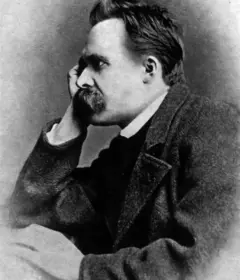
When inherited authorities lose their force, one cannot simply uncover an intact meaning waiting underneath them. Values must be created and revalued—but creation is not whim: genealogy asks what kind of life a value expresses, and affirmation asks whether one can own the life it shapes.
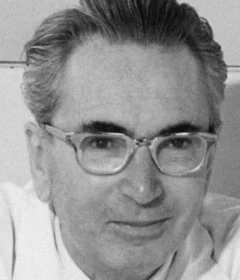
Meaning is not conferred by preference alone. A concrete situation can address this particular person with a task to be answered; conscience discerns that claim fallibly, and creative work may realize meaning without manufacturing its worth.
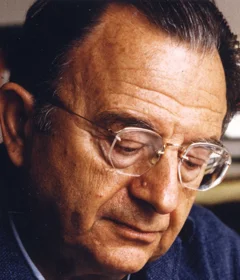
A society can teach people to experience its requirements as their own desires. Meaning must therefore be judged by whether activity develops the human powers of reason, love and productive work—not by sincerity, approval or market success alone.
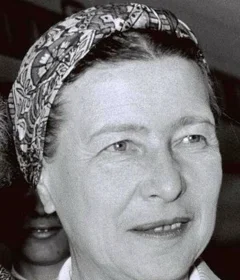
No value arrives fully guaranteed before action. Projects institute ends within ambiguity, yet they are not justified by fiat: an ethical project must will concrete freedom for oneself and for others whose lives it touches.
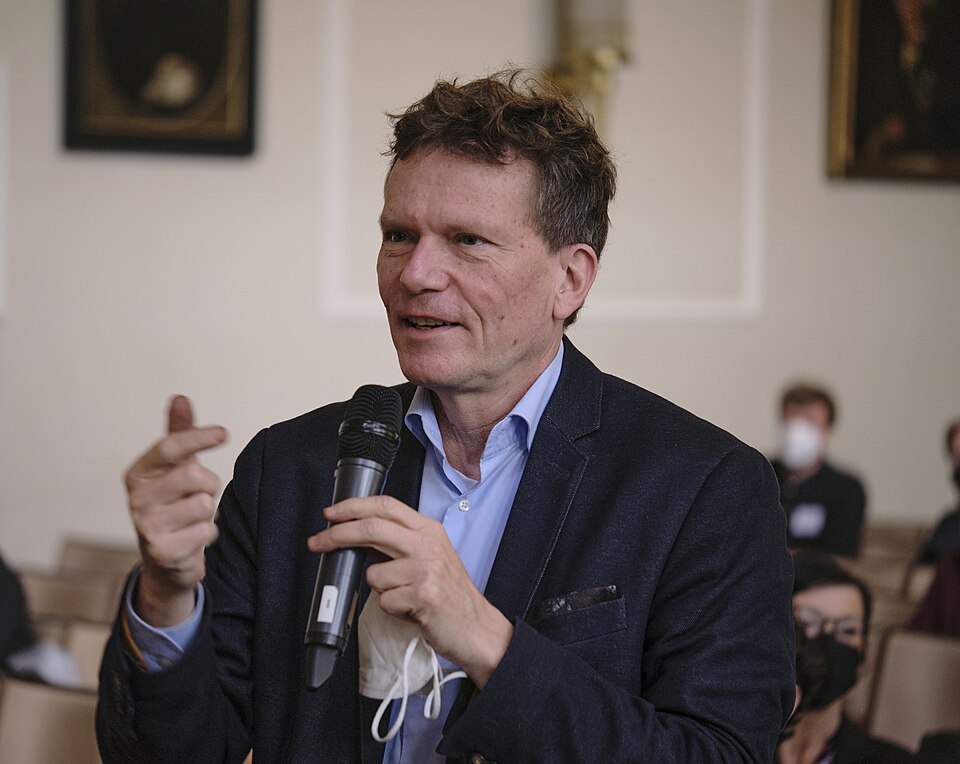
Resonance is not a general theory of meaning and cannot certify a value. It names a responsive relation in which subject and world affect and transform one another; significance may emerge there, but it cannot be manufactured on command.
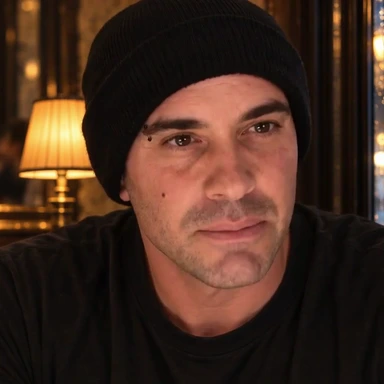
Flow Hijacked cannot treat option count as a value criterion. My proposal is to ask whether a possible future can be critically owned, answer real obligations, enlarge rather than consume concrete freedoms, and leave room for a responsive relation—while admitting that these tests can conflict and do not yield a neutral verdict.
All five reject the equation of meaning with momentary preference, and none grants inherited values authority merely because they are inherited.
Franklian discovery is not obedience to convention; Nietzschean and Beauvoirian creation are not arbitrary choice; Fromm’s productiveness is not performance; Rosa’s resonance is not another word for meaning.
Can a claim on a life be genuinely binding without being either imposed from outside or produced by the person it is meant to judge?
Personal branding invites people to create a meaningful identity while platforms and audiences quietly supply its standards of visibility and success.
Freedom ↔ Situation
Initiative within embodiment, history and constraint
The word freedom is kept, but its meaning fractures. The table must distinguish human standing, effective capacity, responsibility and blame.
Freedom is not self-creation from nothing and the will is not a simple sovereign cause. It is a graded achievement: the capacity to organize competing drives, sustain a direction and work upon inherited formation.
Conditions can be devastating without exhausting personhood. A finite freedom to take a position may remain, but respect for that freedom never proves which response an ill, coerced or depleted person can perform now, and alterable suffering should be changed.
Freedom from authority can leave isolation and anxiety. Freedom to live productively requires capacities for independent thought, love and active work, and those capacities depend on character formation and social conditions.
Freedom is always embodied and situated. Oppression does not merely influence an inner choice; it can systematically block action, recognition and transcendence, so ethical freedom must oppose arrangements that consume another’s future.
Formal choice can coexist with temporal heteronomy. Institutions that must continually grow, innovate and accelerate can give us options while dictating the pace and terms on which any option can be lived.
I would preserve responsibility without inferring blame from the abstract existence of choice. The practical question is double: what response is genuinely available to this person now, and what bodily, relational or social condition must change before another response becomes possible?
None of the five treats freedom as an unconditioned power of choice; embodiment, history, character, institutions or relations shape what can be done.
Frankl’s residual freedom, Beauvoir’s concrete freedom, Nietzsche’s achieved agency, Fromm’s positive freedom and Rosa’s temporal autonomy answer different questions.
How can diminished agency be affirmed without converting every failure to act into blame or treating constraint as total determination?
App-mediated work can present each shift as a choice while ratings, income insecurity and rapid scheduling make refusal practically costly.
Authenticity ↔ Social Formation
A life of one’s own, formed with and by others
No one at the table can recover a pure self untouched by language, institutions or other people. The disagreement concerns what makes appropriation critical rather than compliant.
There is no transparent inner core waiting to be expressed. A life becomes one’s own through genealogy, selection and the difficult work of giving style to bodily and cultural material one did not choose.
Ownness does not mean expressing whichever desire feels strongest. It lies in answering a meaning beyond self-confirmation; yet my account diagnoses conformity more fully than it explains how society may shape the voice experienced as conscience.
A pseudo-want can be sincerely felt because social character carries external requirements inside the person. The test is not social origin but whether the desire supports productive individuality, critical reason and active love rather than commodity-like adaptation.
Subjectivity is embodied, historical and formed through power. Authenticity is not escape from situation but the lucid assumption of ambiguity, including resistance to roles that confine some people to serving the projects of others.
Identity is constituted through relations to people, things, institutions and larger sources of significance. A coherent lifestyle or marketable identity can still leave those relations mute; authenticity cannot be read from performance alone.
I would not search for a desire untouched by influence. I would ask how it was formed, whether it can survive informed reflection, what it does to the person and to others, and whether it permits a life that is lived rather than performed. Even that inquiry needs a contestable account of what counts as damage or growth.
Social influence does not by itself settle whether a desire is one’s own. The five differ over what in personhood, human capacities or relations can ground criticism of that influence.
Social origin does not make every desire false, while sincerity and intensity do not make a desire one’s own. The five standards of appropriation remain irreducibly different.
What evidence distinguishes a critically appropriated desire from one that efficiently reproduces conformity, domination or market demand?
A carefully managed social-media persona can feel intensely personal while being continuously adjusted to anticipated engagement.
Agency ↔ Constraint
What enables action, and what limits or distorts it?
The table refuses a binary choice between total authorship and total determination. Constraint can train, impair, redirect or enter the person as habit and desire.
Agency belongs to an organized plurality of drives, not to a detached commander. Resistance and discipline can form capacities, while punishment, ressentiment and internalized morality can deform them; difficulty has no value merely because it is difficult.
Decision, self-distancing and self-transcendence can support action, but illness, coercion and deprivation may remove entire classes of response. An affirmation of personhood is not an empirical measurement of present capacity.
Institutions operate inside character, fear and desire, not only as external barriers. Productive agency therefore requires personal transformation and social arrangements that support reason, love and meaningful work; neither side substitutes for the other.
Projects require a body, time, material means, recognition and other freedoms. Oppression can systematically confine a person to immanence, so exhorting initiative without examining asymmetrical power can repeat the injustice it claims to overcome.
Modern institutions can enlarge resources and options while imposing deadlines, escalation and permanent adaptation. Agency is not the number of choices displayed but the possibility of appropriating action and experiencing that one’s answer matters.
Flow Hijacked should use graded language: what capacities are present, impaired or supported; which constraints are alterable; whose power defines the choice; and what responsibility is proportionate to the person’s actual reach. More visible options do not by themselves establish agency.
Agency can be cultivated, impaired, redirected and socially supported; it cannot be inferred from the mere presence of alternatives.
None of the five implies that scarcity, pressure or suffering automatically strengthens a person, or that inner change can replace action against avoidable constraints.
What threshold of capacity makes an action one’s own when attention, habit, fear, embodiment, desire and unequal power constrain it together?
Recommendation systems can multiply visible choices while repeatedly steering attention toward the few options most likely to hold it.
Control ↔ Resonance
Deliberate preparation without possession of the outcome
Only Rosa uses resonance as a technical concept. For the other four, the dialogue names the nearest source-grounded problem without claiming a common doctrine.
Self-command can give form to a life, yet total mastery is a fantasy that denies necessity, chance and the plurality within the self. Affirmation is not passive surrender; it is the difficult incorporation of what cannot simply be erased.
Fulfillment, love and self-actualization cannot be commanded directly. They may ensue when attention turns toward a person, task or meaning beyond self-monitoring; this does not require surrendering efforts to change preventable conditions.
The having mode turns self, knowledge and relationship into possessions. The being mode and active love still require discipline, care, responsibility, respect and knowledge, but these practices cannot turn another person into a controllable object.
To possess another freedom is to destroy the reciprocity one sought. Ethical action accepts that outcomes and responses cannot be guaranteed, but ambiguity is not an excuse for passivity when another’s concrete freedom is at stake.
Resonance involves being affected, answering in one’s own voice, reciprocal transformation and constitutive uncontrollability. It is not comfort, warmth, harmony, mindfulness or slowing down, and it disappears when the world must answer exactly as ordered.
Control is justified where it protects safety, reduces preventable harm or prepares conditions for participation. It becomes self-defeating when it demands ownership of another person, of meaning or of response. The proposal is to build reliable support while leaving the encounter itself unowned.
Each gives a reason why complete mastery can destroy the good it seeks, while none recommends abandoning deliberate action.
The four non-Rosan positions do not anticipate resonance. Resonance itself is neither relaxation nor a technique for reliably producing a desired feeling.
Which forms of prediction, treatment, protection and planning preserve openness to what cannot be guaranteed?
Self-tracking can support practical care while inviting a person to treat sleep, mood, exercise and relationship quality as outputs that should become fully measurable and controllable.
Becoming ↔ Continuity
Deep change without erasing the person who changes
The final tension asks whether continuity is a possession, a promise, a history, a relation or an obligation. Reinvention from nothing proves as implausible as a self that never changes.
Becoming does not require amnesia. Memory, promise, style and incorporation can give continuity to transformation; the task is not to erase the past but to become capable of affirming and reworking it without turning identity into a fixed substance.
A decision can genuinely redirect a life, while deeds already done and meanings already realized remain irreversibly part of the past. Responsibility carries continuity: change does not make earlier promises or injuries belong to someone else.
Change is the continuing development of human powers, not the repeated sale of a newly branded self. Durable character can change through insight, practice and social reform, but novelty alone gives no reason to call the change growth.
The self is never complete, yet each new project begins from facticity: body, history, prior action and relations. Continuity is assumed and reworked rather than preserved as an essence, and some inherited identities must be broken because they carry oppression.
Late modernity often requires continual change merely to keep institutions stable. Transformative relation differs from compulsory reinvention, but resonance theory does not by itself provide a complete account of personal identity across time.
I would locate continuity neither in an unchanging essence nor in a single life story. It is carried through embodied history, relationships, responsibility and commitments that can be revised without pretending they never bound us. Change may preserve, repair or relinquish—but it must name what it does to what came before.
All five allow significant change without treating it as reinvention from nothing. They differ over what grounds continuity, including the status of personhood, human capacities, history and relations.
Becoming is not novelty, flexibility, self-improvement or rebranding. Continuity does not require preserving every role, desire or narrative.
What must persist for radical change to remain the change of this person, and what must break when continuity carries domination, guilt or a false identity?
Repeated pressure to reinvent a career can make adaptability look like growth even when each new identity is adopted chiefly to remain employable.
Five objections Tom is not allowed to bypass
Each objection follows from the thinker’s reconstructed position. Tom’s reply is a contemporary Flow Hijacked proposal; it is not attributed to the thinker and does not cancel the remaining difficulty.
Friedrich Nietzsche
If Flow Hijacked values wider possibility, sustainability or wellbeing, who authorizes those criteria? A plurality of futures may express herd values, compulsive novelty or avoidance of the sacrifice a demanding task requires.
A partial answer
The objection rules out treating possibility as an unquestioned good. Flow Hijacked must state and defend its values, submit them to genealogy and ask what forms of life they cultivate. It may sometimes support commitment that closes other possibilities rather than preserving them all.
The proposal still needs a defensible account of life-affirming value and of who may judge the costs imposed by a chosen task.
Viktor Frankl
If meaning is described mainly through the conditions that make possibilities visible or actionable, does its normative address disappear? A usable option is not yet a worthy task, and responsibility cannot be reduced to access.
A partial answer
Enabling conditions can remove obstacles to discernment and response; they cannot decide what deserves an answer. Flow Hijacked must keep the person’s responsibility, conscience and concrete relationships distinct from any account of what has become possible.
How a concrete meaning can bind without becoming either external command or subjective preference remains unsettled.
Erich Fromm
A wider field of possibilities may leave untouched the desires by which those possibilities are ranked. Social character can make institutional demands feel fully one’s own, and flexibility itself can become a market requirement.
A partial answer
Flow Hijacked must examine the social production of desire, not only the person’s stated goal. It can ask whether a desire supports critical reason, active love and productive activity, but those humanistic standards must themselves remain open to argument rather than being imposed by an expert model.
No neutral test yet separates meaningful possibility from a socially manufactured desire that has learned to speak in the first person.
Simone de Beauvoir
An abstract model of possibility can make persons look formally equivalent while embodiment, history, dependence and oppression distribute concrete freedom unequally. A neutral category may carry the viewpoint of those already able to act, leave, risk and be recognized.
A partial answer
Flow Hijacked must begin from situated lives, record asymmetrical power and ask whose freedom a proposed change expands or consumes. Formal availability is insufficient; the account must remain answerable to embodiment, material means, dependence and the freedom of others.
Abstraction remains necessary for comparison, yet it may still erase precisely the lived differences that determine concrete freedom.
Hartmut Rosa
A project that optimizes human possibility may repeat the modern demand to make the world visible, reachable, manageable and useful. More accessible futures may intensify the aggressive stance that renders the world mute.
A partial answer
The proposal must limit optimization to conditions that protect participation and reduce avoidable harm. It cannot promise resonance or treat uncontrollability as a resource to engineer. A future remains livable partly because not everything in it has been made available in advance.
Even a carefully bounded intervention may turn openness into another target of management; the contradiction cannot be designed away.
No verdict—an answerable direction
The meeting does not end in agreement. Nietzsche will not let possibility borrow its value from wellbeing; Frankl will not let enabling conditions replace meaning’s claim; Fromm will not trust desire before examining its social formation; Beauvoir will not let formal freedom conceal oppression; Rosa will not let improvement become unlimited availability.
Tom’s Flow Hijacked proposal survives only in a qualified form: increase neither options nor control for their own sake. Work instead toward conditions in which a person can participate, discern, answer, relate and change—while keeping the criteria of value, the distribution of power and the uncontrollability of response open to challenge.
A future bends here not because it has been mastered, but because a person and a world can still answer one another. That is not a synthesis the five thinkers have endorsed. It is the proposition Tom must carry out of the café and continue to defend.
Thirty sources and the limits of the conversation
The evidence ledger is closed at thirty substantive sources: six for each thinker, comprising four primary and two authoritative secondary works. The sources ground the reconstructed positions; Tom’s words are a contemporary philosophical proposal.
NI-P1Nietzsche, Friedrich. The Gay Science: With a Prelude in German Rhymes and an Appendix of Songs. Edited by Bernard Williams. Translated by Josefine Nauckhoff; poems translated by Adrian Del Caro. Cambridge Texts in the History of Philosophy. Cambridge: Cambridge University Press, 2001. doi:10.1017/CBO9780511812088.
Central evidence for nihilism, value-giving, perspectivism, self-stylization, amor fati, and eternal recurrence.
Meaning ↔ Creation · Freedom ↔ Situation · Authenticity ↔ Social Formation · Agency ↔ Constraint · Control ↔ Resonance · Becoming ↔ Continuity
NI-P2Nietzsche, Friedrich. Beyond Good and Evil: Prelude to a Philosophy of the Future. Edited by Rolf-Peter Horstmann and Judith Norman. Translated by Judith Norman. Cambridge Texts in the History of Philosophy. Cambridge: Cambridge University Press, 2002. doi:10.1017/CBO9780511812033.
Grounds Nietzsche's critique of the simple subject and self-causation, his drive psychology, discipline, herd formation, and value legislation.
Meaning ↔ Creation · Freedom ↔ Situation · Authenticity ↔ Social Formation · Agency ↔ Constraint · Control ↔ Resonance · Becoming ↔ Continuity
NI-P3Nietzsche, Friedrich. On the Genealogy of Morality: A Polemic. Translated and annotated by Maudemarie Clark and Alan J. Swensen; introduction by Maudemarie Clark. Indianapolis: Hackett Publishing, 1998. ISBN 978-0-87220-283-2.
Supplies genealogy's evaluation of values and the analyses of ressentiment, promise, punishment, responsibility, bad conscience, suffering, and ascetic ideals.
Meaning ↔ Creation · Freedom ↔ Situation · Authenticity ↔ Social Formation · Agency ↔ Constraint · Control ↔ Resonance · Becoming ↔ Continuity
NI-P4Nietzsche, Friedrich. Thus Spoke Zarathustra: A Book for All and None. Edited by Robert B. Pippin. Translated by Adrian Del Caro. Cambridge Texts in the History of Philosophy. Cambridge: Cambridge University Press, 2006. doi:10.1017/CBO9780511812095.
Presents value creation, metamorphosis, the overhuman, self-overcoming, redemption of the past, and eternal recurrence in a qualified dramatic form.
Meaning ↔ Creation · Freedom ↔ Situation · Agency ↔ Constraint · Control ↔ Resonance · Becoming ↔ Continuity
NI-S1Reginster, Bernard. The Affirmation of Life: Nietzsche on Overcoming Nihilism. Cambridge, MA: Harvard University Press, 2006. doi:10.4159/9780674042643.
An authoritative, contested reconstruction of nihilism, will to power, resistance, suffering, eternal recurrence, and affirmation.
Meaning ↔ Creation · Agency ↔ Constraint · Control ↔ Resonance · Becoming ↔ Continuity
NI-S2Katsafanas, Paul. The Nietzschean Self: Moral Psychology, Agency, and the Unconscious. Oxford: Oxford University Press, 2016. doi:10.1093/acprof:oso/9780198737100.001.0001.
Reconstructs drives, unconscious motivation, values, willing, unity, agency, freedom, and the self's cultural and social formation.
Freedom ↔ Situation · Authenticity ↔ Social Formation · Agency ↔ Constraint · Control ↔ Resonance · Becoming ↔ Continuity
FR-P1Frankl, Viktor E. Man's Search for Meaning. Foreword by Harold S. Kushner; afterword by William J. Winslade. Boston: Beacon Press, 2006. Originally published in German in 1946. ISBN 978-0-8070-1427-1.
Frankl's clearest compact account of concrete responsibility, finite freedom, self-transcendence, avenues to meaning, tragic optimism, and realized value.
Meaning ↔ Creation · Freedom ↔ Situation · Authenticity ↔ Social Formation · Agency ↔ Constraint · Control ↔ Resonance · Becoming ↔ Continuity
FR-P2Frankl, Viktor E. The Will to Meaning: Foundations and Applications of Logotherapy. Revised and expanded edition. New York: Meridian/New American Library, 1988. ISBN 978-0-452-01034-5.
Focused treatment of freedom of will, will to meaning, self-transcendence, conscience, situation-specific objective meaning, and indirect self-actualization.
Meaning ↔ Creation · Freedom ↔ Situation · Authenticity ↔ Social Formation · Agency ↔ Constraint · Control ↔ Resonance
FR-P3Frankl, Viktor E. The Doctor and the Soul: From Psychotherapy to Logotherapy. Translated by Richard Winston and Clara Winston. 3rd revised and expanded edition. New York: Vintage Books, 1986. ISBN 978-0-394-74317-2.
Systematic clinical anthropology of work, love, suffering, death, psychiatric constraint, and rehumanization, resisting an attitude-choice reduction.
Meaning ↔ Creation · Freedom ↔ Situation · Agency ↔ Constraint · Control ↔ Resonance · Becoming ↔ Continuity
FR-P4Frankl, Viktor E. The Unheard Cry for Meaning: Psychotherapy and Humanism. New York: Simon & Schuster, 1978. ISBN 978-0-671-22891-0; reissued by Touchstone in 1979, ISBN 978-0-671-24736-2, and as an e-book in 2011, eISBN 978-1-4516-6438-6.
Develops the will to meaning, critiques pan-determinism and reductionism, and treats self-detachment, self-transcendence, mortality, hyper-intention, and dereflection.
Meaning ↔ Creation · Freedom ↔ Situation · Authenticity ↔ Social Formation · Agency ↔ Constraint · Control ↔ Resonance · Becoming ↔ Continuity
FR-S1Fizzotti, Eugenio. “Meaning of Life and Determinism and the Franklian Paradigm of Freedom.” In Viktor Frankl und die Philosophie, edited by Dominik Batthyány and Otto Zsok, 23–39. Vienna: Springer, 2005. doi:10.1007/3-211-27524-X_3.
Specialist analysis of meaning, conditioning, determinism, and Franklian freedom, calibrating freedom against acknowledged constraints.
Freedom ↔ Situation · Agency ↔ Constraint · Becoming ↔ Continuity
FR-S2Bailey, Richard. “Meaning, Will to Meaning, and Frankl's Existential Psychiatry.” Philosophical Psychology 37, no. 8 (2024): 2449–2465. First published online December 11, 2022. doi:10.1080/09515089.2022.2156854.
Peer-reviewed critical reconstruction of objective value, willing, self-transcendence, and the criterion of a genuinely worthwhile task.
Meaning ↔ Creation · Authenticity ↔ Social Formation · Agency ↔ Constraint · Control ↔ Resonance
FM-P1Fromm, Erich. The Fear of Freedom. 2nd edition. Routledge Classics. London and New York: Routledge, 2001. First published in the United States as Escape from Freedom in 1941. ISBN 978-0-415-25388-8.
Indispensable account of freedom from and to, individuation, authoritarianism, destructiveness, automaton conformity, pseudo-wants, spontaneity, and social character.
Meaning ↔ Creation · Freedom ↔ Situation · Authenticity ↔ Social Formation · Agency ↔ Constraint · Control ↔ Resonance · Becoming ↔ Continuity
FM-P2Fromm, Erich. Man for Himself: An Inquiry into the Psychology of Ethics. Routledge Classics. London and New York: Routledge, 2003. First published in 1947. ISBN 978-0-415-30771-0.
Provides Fromm's normative architecture: humanistic ethics, existential and historical dichotomies, character orientations, productive orientation, and conscience.
Meaning ↔ Creation · Freedom ↔ Situation · Authenticity ↔ Social Formation · Agency ↔ Constraint · Control ↔ Resonance · Becoming ↔ Continuity
FM-P3Fromm, Erich. The Art of Loving. 50th anniversary edition. Introduction by Peter D. Kramer; biographical afterword by Rainer Funk, translated by Marion Hausner Pauck. New York: Harper Perennial Modern Classics, 2006. First published in 1956. ISBN 978-0-06-112973-5.
Primary basis for active love, care, responsibility, respect, knowledge, and union that preserves individuality rather than possession or domination.
Meaning ↔ Creation · Authenticity ↔ Social Formation · Agency ↔ Constraint · Control ↔ Resonance · Becoming ↔ Continuity
FM-P4Fromm, Erich. To Have or To Be? Bloomsbury Revelations. London: Bloomsbury Academic, 2013. First published in 1976. ISBN 978-1-78093-680-2.
Clarifies having and being orientations, possession, control, alienation, productive activity, socially generated character, and personal-social transformation.
Meaning ↔ Creation · Freedom ↔ Situation · Authenticity ↔ Social Formation · Agency ↔ Constraint · Control ↔ Resonance · Becoming ↔ Continuity
FM-S1Durkin, Kieran. The Radical Humanism of Erich Fromm. Critical Political Theory and Radical Practice. New York: Palgrave Macmillan, 2014. doi:10.1057/9781137428431.
Systematic reconstruction of Fromm's humanism, psychoanalytic social psychology, needs, social character, productiveness, and disputed universalism.
Meaning ↔ Creation · Freedom ↔ Situation · Authenticity ↔ Social Formation · Agency ↔ Constraint · Control ↔ Resonance · Becoming ↔ Continuity
FM-S2Wilde, Lawrence. Erich Fromm and the Quest for Solidarity. New York: Palgrave Macmillan, 2004. doi:10.1007/978-1-137-07511-6. Hardcover ISBN 978-1-4039-6141-9.
Political-theoretical appraisal of freedom, humanistic ethics, alienation, work, manipulated needs, gender, democracy, and solidarity.
Meaning ↔ Creation · Freedom ↔ Situation · Authenticity ↔ Social Formation · Agency ↔ Constraint · Control ↔ Resonance · Becoming ↔ Continuity
BV-P1Beauvoir, Simone de. The Ethics of Ambiguity. Translated by Bernard Frechtman. New York: Citadel Press, 1976. Originally published as Pour une morale de l’ambiguïté. Paris: Gallimard, 1947. ISBN 978-0-8065-0160-4.
Beauvoir's fullest account of ambiguity, facticity and transcendence, situated ethical freedom, projects, oppression, liberation, others, violence, time, and responsibility.
Meaning ↔ Creation · Freedom ↔ Situation · Authenticity ↔ Social Formation · Agency ↔ Constraint · Control ↔ Resonance · Becoming ↔ Continuity
BV-P2Beauvoir, Simone de. “Pyrrhus and Cineas.” Translated by Marybeth Timmermann. In Philosophical Writings, edited by Margaret A. Simons with Marybeth Timmermann and Mary Beth Mader, 89–149. Urbana and Chicago: University of Illinois Press, 2004. ISBN 978-0-252-02982-0.
Examines action without a final absolute, projects, scope of concern, appeal, separation, dependence, and the relation of one's freedom to others.
Meaning ↔ Creation · Freedom ↔ Situation · Authenticity ↔ Social Formation · Agency ↔ Constraint · Control ↔ Resonance · Becoming ↔ Continuity
BV-P3Beauvoir, Simone de. The Second Sex. Translated by Constance Borde and Sheila Malovany-Chevallier. New York: Vintage Books, 2011. Originally published as Le deuxième sexe, 2 vols. Paris: Gallimard, 1949. ISBN 978-0-307-27778-7.
Grounds embodiment, social formation, myth, otherness, dependence, oppression, immanence and transcendence, economic freedom, becoming, and reciprocity.
Meaning ↔ Creation · Freedom ↔ Situation · Authenticity ↔ Social Formation · Agency ↔ Constraint · Control ↔ Resonance · Becoming ↔ Continuity
BV-P4Beauvoir, Simone de. The Coming of Age. Translated by Patrick O’Brian. New York: W. W. Norton, 1996. Originally published as La vieillesse. Paris: Gallimard, 1970. ISBN 978-0-393-31443-4.
Extends Beauvoir's analysis to aging, embodied change, lived and historical time, public classification, exclusion, class, meaningful activity, and continuity.
Meaning ↔ Creation · Freedom ↔ Situation · Authenticity ↔ Social Formation · Agency ↔ Constraint · Control ↔ Resonance · Becoming ↔ Continuity
BV-S1Bergoffen, Debra B. The Philosophy of Simone de Beauvoir: Gendered Phenomenologies, Erotic Generosities. Albany: State University of New York Press, 1997. ISBN 978-0-7914-3152-8.
Field-defining reconstruction of Beauvoir as a philosopher of embodiment, otherness, generosity, reciprocity, and the erotic.
Meaning ↔ Creation · Freedom ↔ Situation · Authenticity ↔ Social Formation · Agency ↔ Constraint · Control ↔ Resonance · Becoming ↔ Continuity
BV-S2Kruks, Sonia. Simone de Beauvoir and the Politics of Ambiguity. New York: Oxford University Press, 2012. doi:10.1093/acprof:oso/9780195381443.001.0001.
Interprets embodied and situated freedom through oppression, privilege, asymmetrical responsibility, uncertain political judgment, action, and failure.
Meaning ↔ Creation · Freedom ↔ Situation · Authenticity ↔ Social Formation · Agency ↔ Constraint · Control ↔ Resonance · Becoming ↔ Continuity
RO-P1Rosa, Hartmut. Social Acceleration: A New Theory of Modernity. Translated by Jonathan Trejo-Mathys. New York: Columbia University Press, 2013. doi:10.7312/rosa14834.
Systematic account of technological and social acceleration, life pace, dynamic stabilization, the shrinking present, desynchronization, situational identity, and structural pressure.
Freedom ↔ Situation · Authenticity ↔ Social Formation · Agency ↔ Constraint · Becoming ↔ Continuity
RO-P2Rosa, Hartmut. Resonance: A Sociology of Our Relationship to the World. Translated by James C. Wagner. Cambridge: Polity, 2019. Hardcover ISBN 978-1-5095-1989-7.
Defines resonance and alienation as world-relations through affection, own voice, responsive self-efficacy, transformation, uncontrollability, autonomy, and social conditions.
Meaning ↔ Creation · Freedom ↔ Situation · Authenticity ↔ Social Formation · Agency ↔ Constraint · Control ↔ Resonance · Becoming ↔ Continuity
RO-P3Rosa, Hartmut. The Uncontrollability of the World. Translated by James C. Wagner. Cambridge: Polity, 2020. Hardcover ISBN 978-1-5095-4315-1.
Focused account of modernity's project of availability and controllability, its institutional expansion, and resonance's constitutive non-commandability.
Meaning ↔ Creation · Freedom ↔ Situation · Agency ↔ Constraint · Control ↔ Resonance · Becoming ↔ Continuity
RO-P4Rosa, Hartmut. “Dynamic Stabilization, the Triple A. Approach to the Good Life, and the Resonance Conception.” Questions de communication 31 (2017): 437–456. doi:10.4000/questionsdecommunication.11228.
Connects dynamic stabilization and availability, accessibility, and attainability to resonance as an alternative evaluative world-relation.
Meaning ↔ Creation · Freedom ↔ Situation · Authenticity ↔ Social Formation · Agency ↔ Constraint · Control ↔ Resonance · Becoming ↔ Continuity
RO-S1Susen, Simon. “The Resonance of Resonance: Critical Theory as a Sociology of World-Relations?” International Journal of Politics, Culture, and Society 33, no. 3 (2020): 309–344. First published online March 28, 2019. doi:10.1007/s10767-019-9313-6.
Comprehensive scholarly reconstruction and critique of resonance, alienation, normativity, autonomy, universality, power, and inequality.
Meaning ↔ Creation · Freedom ↔ Situation · Authenticity ↔ Social Formation · Agency ↔ Constraint · Control ↔ Resonance · Becoming ↔ Continuity
RO-S2Anderson, Amanda. “The Moral and Political Challenges of Hartmut Rosa's Theory of Resonance.” The Journal of Chinese Sociology 10, article 6 (2023): 1–13. doi:10.1186/s40711-023-00182-9.
Focused critique of anthropological and sociocultural claims, autonomy, power, moral evaluation, and political transformation in resonance theory.
Meaning ↔ Creation · Freedom ↔ Situation · Authenticity ↔ Social Formation · Agency ↔ Constraint · Control ↔ Resonance · Becoming ↔ Continuity
Portraits and credits
The five thinkers’ portraits are real photographs. Tom’s portrait comes from the approved film. Images are displayed with cropping and grayscale styling.
- Friedrich Nietzsche · Gustav-Adolf Schultze, Naumburg, 1882; scan processed by Anton / Wikimedia Commons · Public Domain Mark 1.0; PD-old-100; PD-US expired
- Simone de Beauvoir · Moshe Milner / Government Press Office (Israel), Wikimedia Commons · CC BY-SA 3.0
- Viktor Frankl · Prof. Dr. Franz Vesely / Viktor-Frankl-Archiv, Wikimedia Commons; crop by MRCLD · CC BY-SA 3.0 DE
- Erich Fromm · Müller-May / Rainer Funk, Wikimedia Commons; crop by Xabier · CC BY-SA 3.0 DE
- Hartmut Rosa, Jena 2022 · Toter Alter Mann / Wikimedia Commons · CC BY-SA 4.0 · Display crop and grayscale.
- Tom · still from the approved Flow Hijacked film.

.jpg)
.jpg)
.jpg)
