EVIDENCE POSITION
Moderate evidence for family-involved approaches and structured treatment engagement; outcomes depend strongly on context and safety.
The purpose is not remote diagnosis. It is to separate what can be said confidently, what still varies from person to person, and which next action may be safe and useful now.
FIELD MAP
Care works best when four rights remain visible
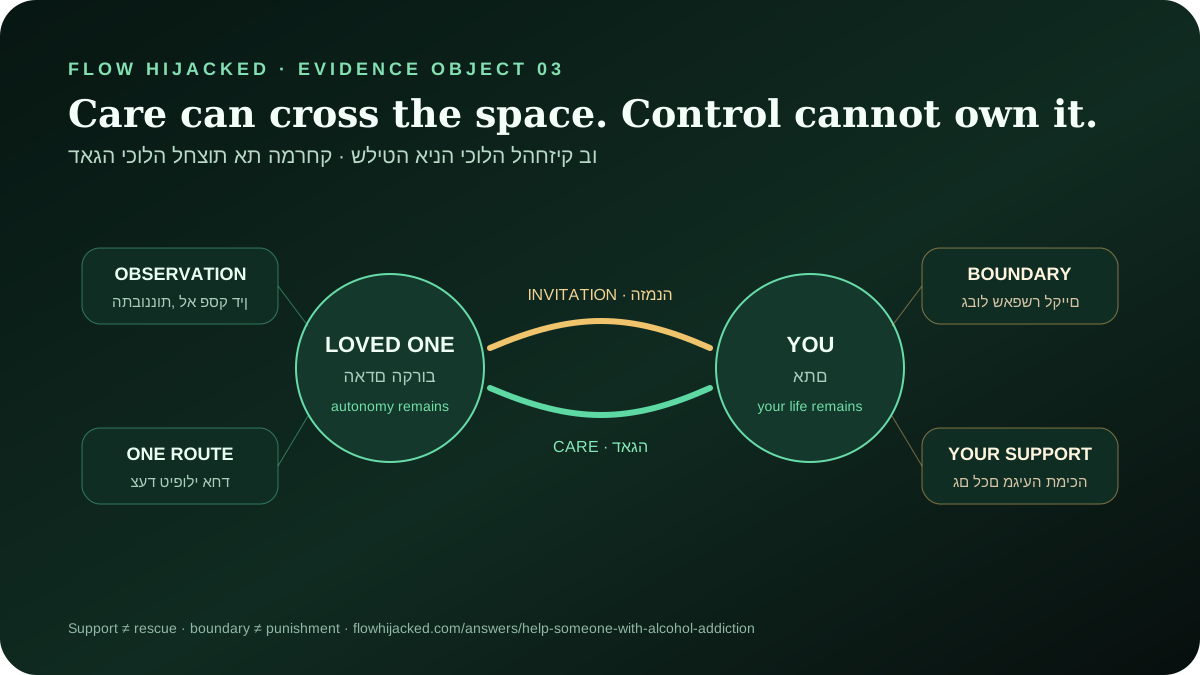
A four-part field places observation, invitation, boundary and self-preservation around two autonomous people, with care flowing without surveillance.
Download the scientific figure · SVG ↓- 01
Observation
Name what changed without pretending to know the whole diagnosis or motive.
- 02
Invitation
Offer a real next route—doctor, clinic, meeting, transport—not a vague demand to 'get help.'
- 03
Boundary
State what you will and will not participate in, without using a boundary as disguised control.
- 04
Self-preservation
Distribute support so fear and responsibility do not collapse onto one person.
A conversation with a reachable next step
Choose a calm, private time when the person is not intoxicated. Use concrete observations: 'You missed work twice and shook in the morning,' rather than a character verdict. Ask an open question and listen long enough to learn what alcohol is doing for the person as well as what it is costing.
End with one offer that reduces friction: identify a clinic, sit beside them during a call, arrange transport or accompany them to a first appointment. The person retains agency unless immediate danger requires emergency action.
Boundaries are information about your participation
A boundary is clearest when it names your action: 'I will not get in the car if you have been drinking' or 'I will leave if shouting begins.' It is not a prediction that the boundary will make someone stop drinking.
Support for the loved one is not secondary. Individual or family therapy, peer groups for relatives, practical advice and a safety plan can restore options that chronic vigilance has narrowed.
NOT EVERYTHING AT ONCE
Three proportionate actions
- 01
Prepare one sentence
Observation + care + invitation: 'I noticed ___. I care about you. Would you look at one treatment option with me tomorrow?'
- 02
Name one boundary
Choose a boundary tied to safety or your participation, and decide what you will do if it is crossed.
- 03
Add another support node
Tell one trusted professional, family member or support service what is happening so you are not carrying the entire system alone.
GO DEEPER
The canonical knowledge behind this answer
INFERENCE BOUNDARY
What this page still cannot know
- No wording guarantees treatment entry, honesty or recovery.
- Family involvement can help, but coercion, violence, child safety, financial control and severe illness require different professional responses.
Primary evidence anchors
Starting the Conversation ↗
NIAAA Alcohol Treatment Navigator · accessed 2026
Prepare, choose a safe and sober time, use a nonjudgmental tone and offer concrete treatment-search help.איך לעודד אדם מכור לפנות לטיפול ↗
משרד הבריאות · accessed 2026
Israeli care routes and practical accompaniment when a person is willing to consider help.תמיכה משפחתית במכורים ובמחלימים מהתמכרות ↗
משרד הבריאות · accessed 2026
Compassion and support must coexist with boundaries and protection of the family member's own wellbeing.The Role of the Family in Alcohol Use Disorder Recovery for Adults ↗
Alcohol Research: Current Reviews / PMC · 2021
Families can influence treatment entry and recovery, but family effects and intervention evidence are heterogeneous.