EVIDENCE POSITION
High-confidence clinical guidance for risk assessment and acute management; lower certainty for any one person's exact duration.
The purpose is not remote diagnosis. It is to separate what can be said confidently, what still varies from person to person, and which next action may be safe and useful now.
FIELD MAP
Four clocks, one safety decision
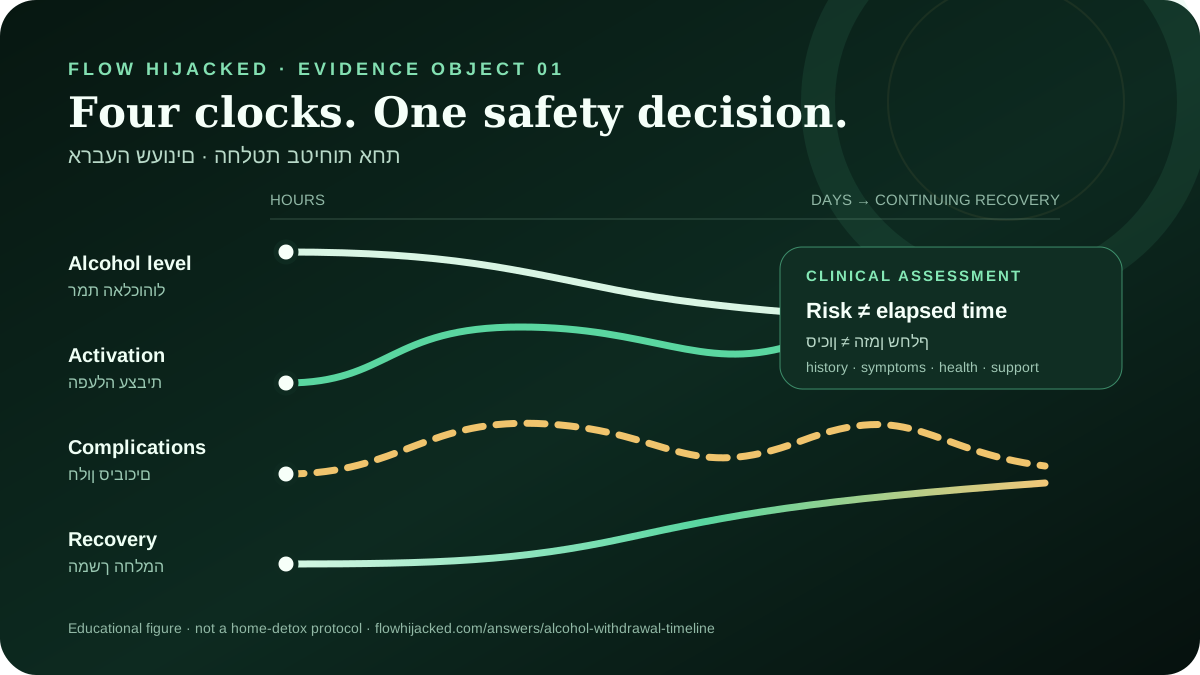
Four parallel clocks show falling alcohol level, autonomic activation, a variable complication window and slower continuing recovery, all feeding one clinical safety decision.
Download the scientific figure · SVG ↓- 01
Falling alcohol level
The nervous system loses a depressant input to which it may have adapted.
- 02
Autonomic activation
Tremor, sweating, nausea, anxiety, insomnia and a racing pulse can emerge.
- 03
Complication window
Seizure, hallucination and delirium risk does not follow one identical timetable.
- 04
Continuing recovery
Sleep, mood, stress and craving can recover on slower clocks than acute detoxification.
What the first days can—and cannot—tell you
Clinical guidance uses symptom severity, drinking history, previous withdrawal, medical and psychiatric conditions, other substances, available support and the ability to return for reassessment. It does not use elapsed hours alone.
A person may look relatively well early and still need monitoring. Another person may have distressing but uncomplicated symptoms. The distinction belongs to clinical assessment, not an online checklist.
Detoxification is a doorway, not the whole treatment
Managing acute withdrawal reduces immediate danger. It does not by itself treat the learning, stress, sleep, psychiatric, relational and social loops that can pull alcohol back into the centre of life.
The useful bridge is withdrawal care → continuing treatment → ordinary-life support. Medication for alcohol use disorder, psychotherapy, mutual support, family work and practical recovery structures may each matter for different people.
NOT EVERYTHING AT ONCE
Three proportionate actions
- 01
Before stopping
Tell a clinician how much and how often you drink, when the last drink was, previous withdrawal or seizures, medications, other substances and major medical conditions.
- 02
During the vulnerable window
Use the monitoring plan and level of care agreed with the clinical team. Do not use alcohol or unprescribed sedatives to improvise a taper.
- 03
After acute withdrawal
Arrange the next treatment contact before the detoxification window closes; continuity is part of safety.
GO DEEPER
The canonical knowledge behind this answer
INFERENCE BOUNDARY
What this page still cannot know
- Published timelines describe populations, not a personal countdown.
- Symptoms may reflect withdrawal, intoxication, infection, medication effects, head injury, metabolic illness or more than one process.
Primary evidence anchors
The ASAM Clinical Practice Guideline on Alcohol Withdrawal Management ↗
American Society of Addiction Medicine · 2020
Risk assessment, levels of care, monitoring and the variable time course of acute alcohol withdrawal.Understanding Alcohol Use Disorder ↗
NIAAA · reviewed 2025
Recognised withdrawal symptoms, treatment routes and the need for medical help when withdrawal may be dangerous.גמילה מהתמכרויות ↗
משרד הבריאות · accessed 2026
Israeli public guidance that physical withdrawal from alcohol or drugs may require medical supervision and must connect to continuing care.